Buy frohnau.eu ?
We are moving the project
frohnau.eu .
Are you interested in purchasing the domain
frohnau.eu ?
domain@kv-gmbh.de · 0541-91531010
Buy frohnau.eu ?
Why does Lipschitz continuity automatically imply continuity?
Lipschitz continuity automatically implies continuity because Lipschitz continuity places a bound on the rate at which a function can change. This means that the function cannot have sudden, large changes in its values, and therefore it must be continuous. In other words, if a function is Lipschitz continuous, it is guaranteed to be continuous because it cannot have any abrupt jumps or discontinuities. This property makes Lipschitz continuity a stronger condition than just continuity. **
Is Continuity bugged?
Continuity is not bugged. It is a fundamental concept in mathematics and refers to the idea that a function or a curve can be drawn without lifting the pen from the paper. In the context of software development, continuity refers to the smooth and uninterrupted operation of a program or system. If there are issues with continuity in a software application, it is likely due to bugs or errors in the code, rather than a problem with the concept of continuity itself. **
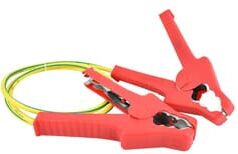

Similar search terms for Continuity
Top-Angebote
Products related to Continuity:
-
Inspire Curations DM850 Digital Multimeter 1999 Count AC DC Voltage Tester With Ohm, Current & Continuity Measurement orangeGet accurate electrical readings with confidencewhether you're troubleshooting at home or working on professional repairs. This digital multimeter tester is designed for electricians, technicians, and DIY users who need reliable measurements in a...53,00 $*Shipping: 0,00 $Secure redirect to the provider
-
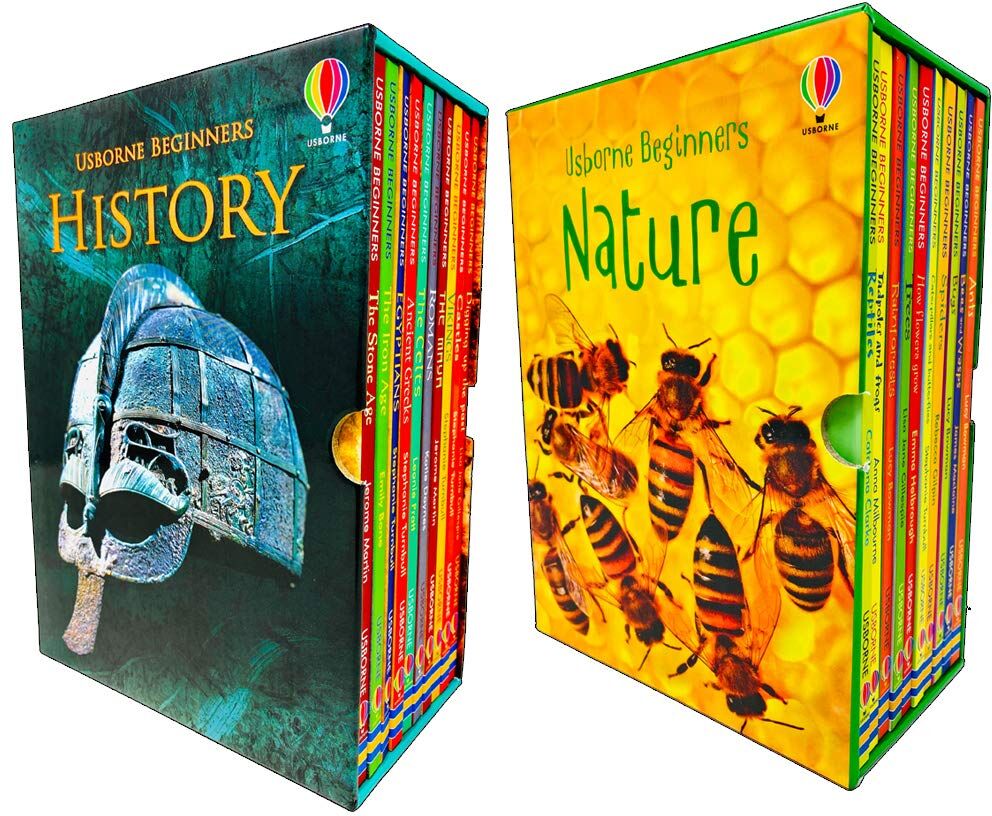
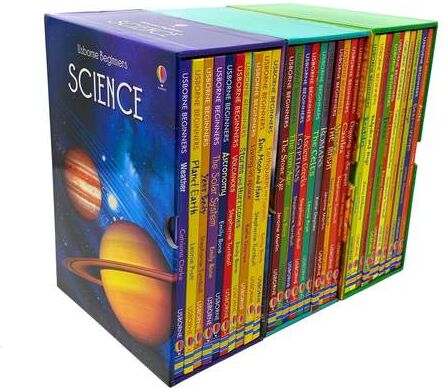
Usborne Publishing Ltd Usborne Beginners History & Usborne Beginners Nature 20 Books Collection Box SetTitles in this set: Usborne Beginners History Stone Age Iron Age Egyptians Ancient Greeks Celts Romans The Maya Vikings Castles Digging Up the Past. Usborne Beginners Nature Reptiles Tadpoles and Frogs Rainforest Trees How Flowers Grow Caterpillars and Butterflies Spiders Bugs Bees & Wasps Ants Description Stone Age This simple information book follows the history of Stone Age people and how they lived. Iron Age This simple information book charts the history of Iron Age people and how they lived, including their farming methods, the gods they prayed to and the hill forts where they lived. Egyptians Who were the ancient Egyptians? Why did they build pyramids and how were mummies made? Ancient Greeks Find out about Ancient Greece, what people wore, ate and did for fun and learn about some of the most famous philosophers and mathematicians of the age in this compelling book for beginner readers. Celts Who were the Celts exactly? Did you know they lived on top of hills? Do you have any idea how Celtic warriors made themselves look really scary in battle? Romans Who were the ancient Romans? Where did they go to eat, shop and wash? What did they do for fun? The Maya Who were the Maya? Where did they live? Why did they build tall stone temples? Vikings Find out what it was like to be a Viking, and learn about Viking homes, feasts, boats, gods and much more in this fascinating book. Castles Who lived in a castle, and what was it like? Children can find out the answers to these questions and lots more about the wonderful world of castles in this informative book. Digging Up the Past How do ancient things get buried? Who digs them up? And what do they find? Beginner readers can find answers to these questions and more in this colourful information book. Reptiles This is a fantastic brand new addition to the "Beginners" series, designed to provide an informative introduction to trees and plant-life for young readers. Tadpoles and Frogs Vivid, full colour illustrations and photographs on every page, accompanied by short, informative text. Rainforest It offers a terrific reading practice for children who prefer fact to fiction. It is developed with a reading expert from Roehampton University to help young readers grow in confidence. Trees This is a fantastic brand new addition to the 'Beginners' series, designed to provide an informative introduction to trees and plant-life for young readers. How Flowers Grow How do flowers grow in dry deserts? How do animals help to spread seeds? Which flower smells like rottng meat? Caterpillars and Butterflies Usborne Beginners are colourful information books for children beginning to read on their own. Spiders Usborne Beginners are colourful information books for children beginning to read on their own. Bugs Usborne Beginners are colourful information books for children beginning to read on their own. Bees & Wasps A slim and unintimidating book which belies its contents - a wealth of information, much of which will be...34,99 £*Shipping: 2,99 £Secure redirect to the provider
-
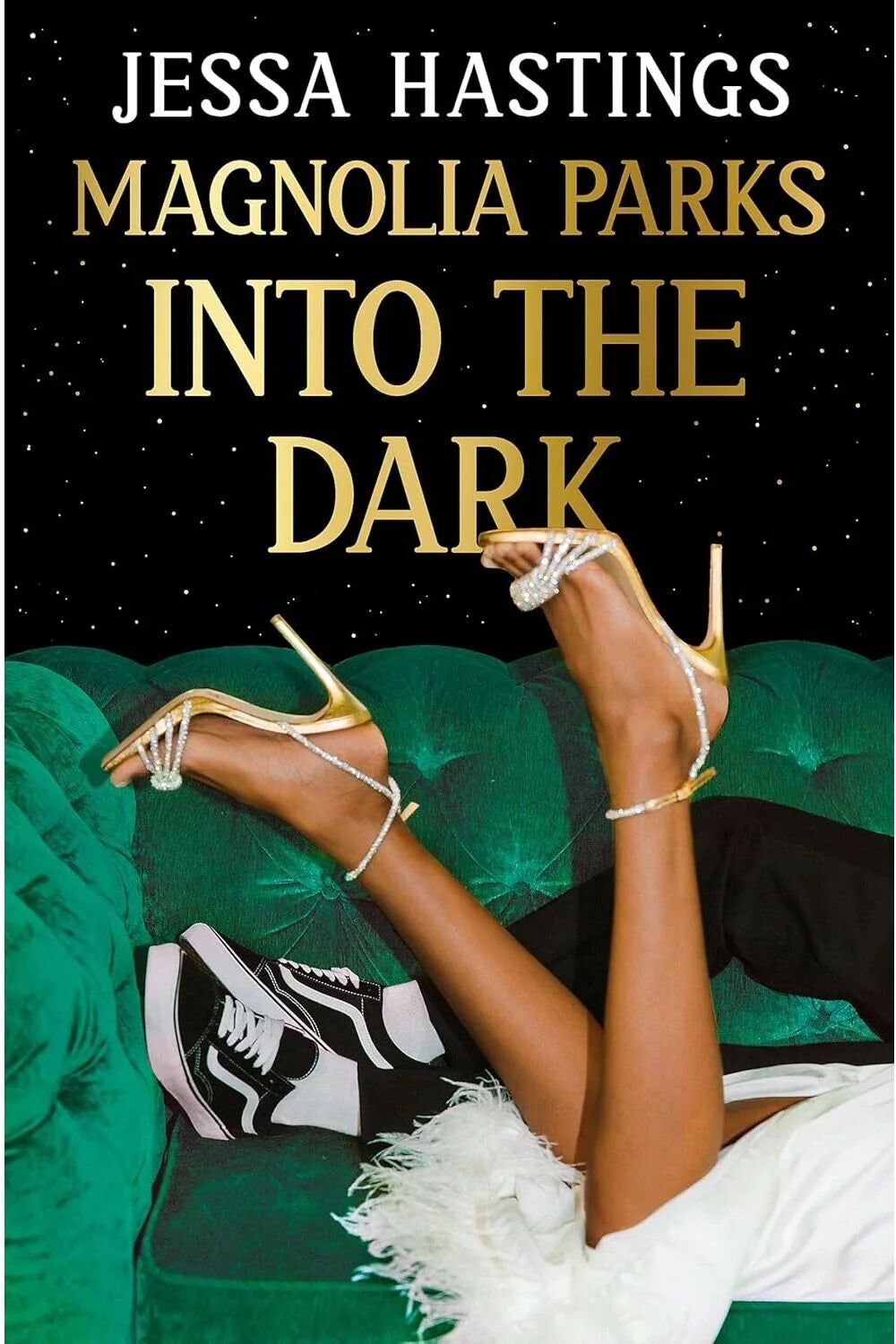
Orion Magnolia Parks: Into the Dark by Jessa Hastings - Book 5 Magnolia Parks Universe - Contemporary Romance Paperback -Get lost in the addictive world of Jessa Hastings' Magnolia Parks Universe with book five, Into the Dark. This contemporary romance novel follows Magnolia and BJ as they face a devastating loss while planning their high-profile wedding. As family tensions rise and secrets resurface, they must decide if their love can survive the darkest chapter of their story yet. A brand new paperback edition, perfect for fans of glamorous, emotionally charged romance. Jessa Hastings weaves high-society glamour with raw, intimate vulnerability, exploring the complexities of relationships and the power of love to overcome adversity. Following on from Magnolia Parks, Daisy Haites, Magnolia Parks: The Long Way Home and Daisy Haites: The Great Undoing, Into the Dark is a gripping addition to the series, sure to captivate readers with its relatable characters and engaging storyline.8,99 £*Shipping: 2,99 £Secure redirect to the provider
-
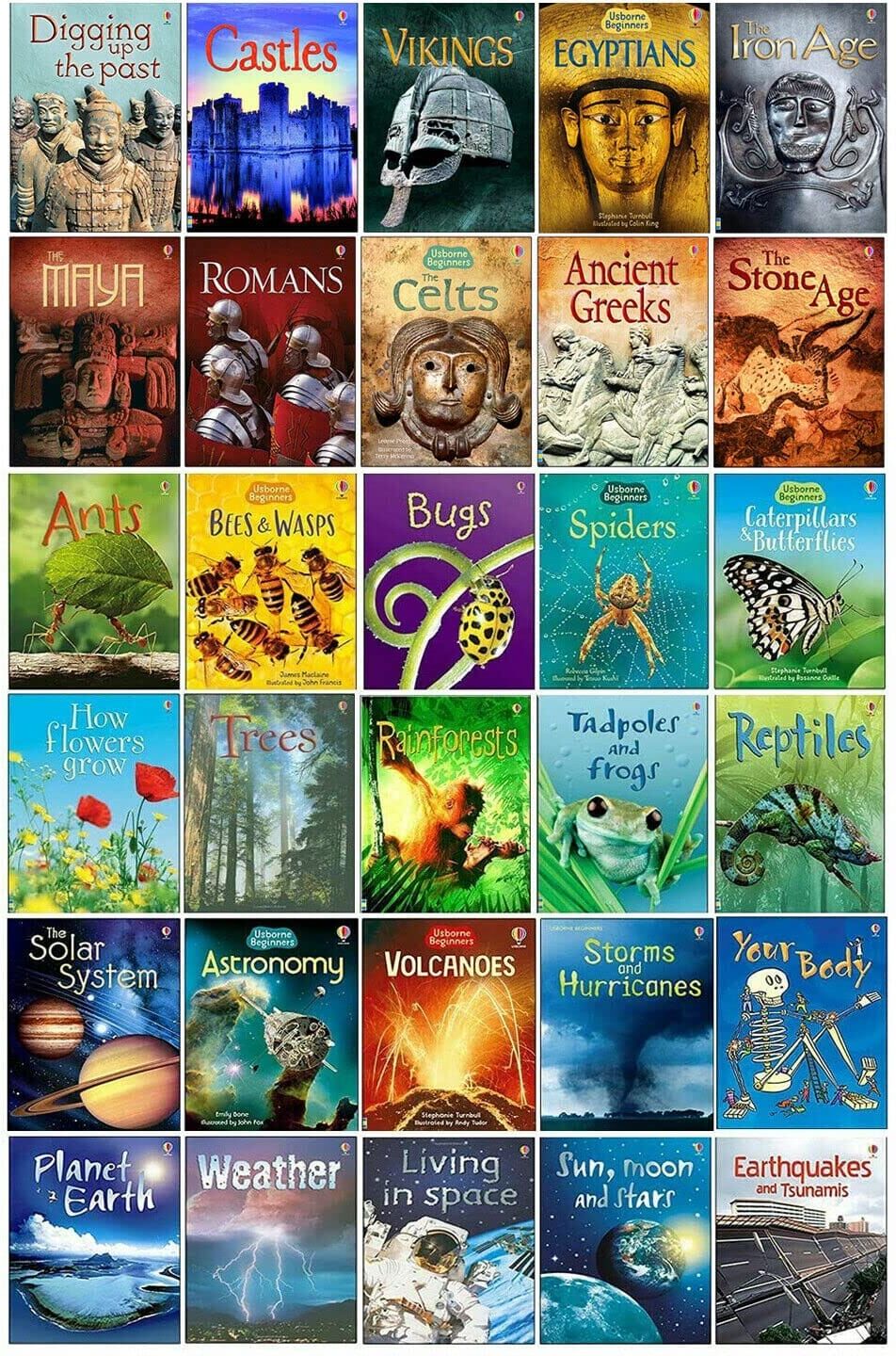
Usborne Beginners Nature, Science & History Collection 30 Books Set - Ages 4-10 - Paperback Usborne Publishing LtdTitles in This Set: Usborne Beginners Nature 10 Books: 1. Ants 2. Bees & Wasps 3. Bugs 4. Spiders 5. Tadpoles and Frogs 6. Caterpillars and Butterflies 7. How Flowers Grow 8. Trees 9. Rainforest 10. Reptiles Usborne Beginners Science 10 Books: 1. Earthquakes & Tsunamis 2. Sun Moon and Stars 3. Living in Space 4. Storms and Hurricanes 5. Volcanoes 6. Astronomy 7. The Solar System 8. Your Body 9. Planet Earth 10. Weather Usborne Beginners History 10 Books: Titles in This Set: 1. Ancient Greeks 2. Castles 3. Celts 4. Digging Up the Past 5. Egyptians 6. Iron Age 7. Maya 8. Romans 9. Stone Age 10. Vikings Description : Usborne Beginners Nature 10 Books Ants Where do ants live? What do they eat? How much weight can they carry? Little children can find out the answers to these questions and much more in this simple introduction to the world of ants. Bees & Wasps What do bees and wasps eat? What type of nests do they make? How do bees make honey? Find out the answers and lots more in this intriguing introduction to the fascinating world of bees and wasps. Bugs ''There are all kinds of different bugs. Some can jump up high. Other bugs have lots of legs.” Bugs is part of an exciting reading series for young children, with lots of pictures and very simple text. Spiders “Spiders have eight legs. Most of them have eight eyes, but some of them can’t see very well.” Learn all about spiders in this great book for children learning to read by themselves. Tadpoles and Frogs From egg to frog, find out about the entire life cycle of a frog in this easy-to-read fully illustrated book for young learners ages 4+. It comes complete with weblinks so you can see the process for yourself. Caterpillars and Butterflies A beautifully illustrated introduction to the life of butterflies and caterpillars, with easy to read text for beginner readers. The life cycle of a butterfly is shown with stunning photographs and illustrations, and there are links to carefully selected websites with videos that show butterflies emerging from their pupae. How Flowers Grow How do flowers grow in dry deserts? How do animals help to spread seeds? Which flower smells like rotting meat? Find out in this great book for young readers ages four and up. Trees How do trees use their leaves to make food? Why do they grow flowers and fruit? Which animals live inside a tree trunk and build nests in its branches? How can we help to protect trees? This book has all the answers and much more, along with photographs, step-by-step illustrations, simple text and links to websites with video clips and activities. Rainforests Learn all about the rainforest in this fantastic easy-to-read book for children 4+ beginning to strike out on their own. From towering trees to rainforest rivers, this fully-illustrated book also features links to carefully selected websites. Reptiles Learn all about the lizard world in this fully-illustrated guide, the latest in the Usborne Beginners series. From scaly skin to tongue tricks...42,75 £*Shipping: 0,00 £Secure redirect to the provider

-
What is personal continuity?
Personal continuity refers to the sense of identity and connectedness that individuals experience over time. It encompasses the feeling of being the same person despite changes in physical appearance, beliefs, and experiences. Personal continuity is often tied to the concept of self-identity and the ability to maintain a coherent sense of self across different stages of life. It can also involve the preservation of memories, values, and relationships that contribute to a person's sense of continuity and stability. **
-
What is the difference between pointwise continuity and uniform continuity in mathematics?
Pointwise continuity refers to the property of a function where it is continuous at each individual point in its domain. This means that for every point x in the domain, the function f(x) has a limit as x approaches that point. On the other hand, uniform continuity refers to the property of a function where the rate of change of the function is controlled by a single value for the entire domain. In other words, for any ε > 0, there exists a δ > 0 such that for all x and y in the domain, |x - y| < δ implies |f(x) - f(y)| < ε. In pointwise continuity, the choice of δ may depend on the specific point x, while in uniform continuity, the choice of δ must work for the entire domain simultaneously. **
-
What is the equivalence of the continuity concepts Epsilon-Delta and sequential continuity?
The equivalence of the continuity concepts Epsilon-Delta and sequential continuity lies in the fact that they both capture the idea of a function being continuous at a point. In the Epsilon-Delta definition, continuity is defined in terms of neighborhoods and limits, while in sequential continuity, it is defined in terms of sequences converging to a point. Both definitions ultimately aim to capture the intuitive notion of a function having no sudden jumps or breaks at a particular point. Despite the differences in their formal definitions, both concepts are equivalent and can be used interchangeably to prove continuity of a function. **
-
How can one disprove continuity?
One way to disprove continuity is to find a point where the function is not defined or where the limit of the function does not exist. Another way is to show that the function has a jump discontinuity, where the value of the function changes abruptly at a certain point. Additionally, one can disprove continuity by demonstrating that the function has an infinite discontinuity, such as a vertical asymptote where the function approaches infinity at a certain point. **
What is the continuity equation?
The continuity equation is a fundamental principle in fluid dynamics that states that the mass of a fluid entering a system must be equal to the mass of the fluid leaving the system, assuming there are no sources or sinks of mass within the system. Mathematically, it is expressed as the equation of continuity, which states that the product of the fluid density, velocity, and cross-sectional area must remain constant at any point along a flow. This equation is derived from the principle of conservation of mass and is essential for understanding and analyzing fluid flow in various engineering applications. **
What does good continuity mean?
Good continuity means that a story or narrative flows smoothly and logically, with a consistent timeline and no major plot holes or inconsistencies. It ensures that the events and characters in a story remain believable and coherent, maintaining the audience's suspension of disbelief. Good continuity also involves maintaining consistency in the visual and audio elements of a production, such as props, costumes, and sound effects, to create a seamless viewing experience. **
Top-Angebote
Products related to Continuity:
-
Inspired Deals Digital Voltage Tester And Socket Phase Meter With Continuity Test blackTake the guesswork out of everyday electrical checks with a compact tool built for faster, more confident troubleshooting. This ANENG digital voltage tester combines socket testing, ACDC voltage detection, continuity checking, and liveneutral...49,97 $*Shipping: 0,00 $Secure redirect to the provider
-
Inspire Curations DM850 Digital Multimeter 1999 Count AC DC Voltage Tester With Ohm, Current & Continuity Measurement orangeGet accurate electrical readings with confidencewhether you're troubleshooting at home or working on professional repairs. This digital multimeter tester is designed for electricians, technicians, and DIY users who need reliable measurements in a...53,00 $*Shipping: 0,00 $Secure redirect to the provider
-
Usborne Publishing Ltd Usborne Beginners History & Usborne Beginners Nature 20 Books Collection Box SetTitles in this set: Usborne Beginners History Stone Age Iron Age Egyptians Ancient Greeks Celts Romans The Maya Vikings Castles Digging Up the Past. Usborne Beginners Nature Reptiles Tadpoles and Frogs Rainforest Trees How Flowers Grow Caterpillars and Butterflies Spiders Bugs Bees & Wasps Ants Description Stone Age This simple information book follows the history of Stone Age people and how they lived. Iron Age This simple information book charts the history of Iron Age people and how they lived, including their farming methods, the gods they prayed to and the hill forts where they lived. Egyptians Who were the ancient Egyptians? Why did they build pyramids and how were mummies made? Ancient Greeks Find out about Ancient Greece, what people wore, ate and did for fun and learn about some of the most famous philosophers and mathematicians of the age in this compelling book for beginner readers. Celts Who were the Celts exactly? Did you know they lived on top of hills? Do you have any idea how Celtic warriors made themselves look really scary in battle? Romans Who were the ancient Romans? Where did they go to eat, shop and wash? What did they do for fun? The Maya Who were the Maya? Where did they live? Why did they build tall stone temples? Vikings Find out what it was like to be a Viking, and learn about Viking homes, feasts, boats, gods and much more in this fascinating book. Castles Who lived in a castle, and what was it like? Children can find out the answers to these questions and lots more about the wonderful world of castles in this informative book. Digging Up the Past How do ancient things get buried? Who digs them up? And what do they find? Beginner readers can find answers to these questions and more in this colourful information book. Reptiles This is a fantastic brand new addition to the "Beginners" series, designed to provide an informative introduction to trees and plant-life for young readers. Tadpoles and Frogs Vivid, full colour illustrations and photographs on every page, accompanied by short, informative text. Rainforest It offers a terrific reading practice for children who prefer fact to fiction. It is developed with a reading expert from Roehampton University to help young readers grow in confidence. Trees This is a fantastic brand new addition to the 'Beginners' series, designed to provide an informative introduction to trees and plant-life for young readers. How Flowers Grow How do flowers grow in dry deserts? How do animals help to spread seeds? Which flower smells like rottng meat? Caterpillars and Butterflies Usborne Beginners are colourful information books for children beginning to read on their own. Spiders Usborne Beginners are colourful information books for children beginning to read on their own. Bugs Usborne Beginners are colourful information books for children beginning to read on their own. Bees & Wasps A slim and unintimidating book which belies its contents - a wealth of information, much of which will be...34,99 £*Shipping: 2,99 £Secure redirect to the provider
-
Why does Lipschitz continuity automatically imply continuity?
Lipschitz continuity automatically implies continuity because Lipschitz continuity places a bound on the rate at which a function can change. This means that the function cannot have sudden, large changes in its values, and therefore it must be continuous. In other words, if a function is Lipschitz continuous, it is guaranteed to be continuous because it cannot have any abrupt jumps or discontinuities. This property makes Lipschitz continuity a stronger condition than just continuity. **
-
Is Continuity bugged?
Continuity is not bugged. It is a fundamental concept in mathematics and refers to the idea that a function or a curve can be drawn without lifting the pen from the paper. In the context of software development, continuity refers to the smooth and uninterrupted operation of a program or system. If there are issues with continuity in a software application, it is likely due to bugs or errors in the code, rather than a problem with the concept of continuity itself. **
-
What is personal continuity?
Personal continuity refers to the sense of identity and connectedness that individuals experience over time. It encompasses the feeling of being the same person despite changes in physical appearance, beliefs, and experiences. Personal continuity is often tied to the concept of self-identity and the ability to maintain a coherent sense of self across different stages of life. It can also involve the preservation of memories, values, and relationships that contribute to a person's sense of continuity and stability. **
-
What is the difference between pointwise continuity and uniform continuity in mathematics?
Pointwise continuity refers to the property of a function where it is continuous at each individual point in its domain. This means that for every point x in the domain, the function f(x) has a limit as x approaches that point. On the other hand, uniform continuity refers to the property of a function where the rate of change of the function is controlled by a single value for the entire domain. In other words, for any ε > 0, there exists a δ > 0 such that for all x and y in the domain, |x - y| < δ implies |f(x) - f(y)| < ε. In pointwise continuity, the choice of δ may depend on the specific point x, while in uniform continuity, the choice of δ must work for the entire domain simultaneously. **
Similar search terms for Continuity
-
Orion Magnolia Parks: Into the Dark by Jessa Hastings - Book 5 Magnolia Parks Universe - Contemporary Romance Paperback -Get lost in the addictive world of Jessa Hastings' Magnolia Parks Universe with book five, Into the Dark. This contemporary romance novel follows Magnolia and BJ as they face a devastating loss while planning their high-profile wedding. As family tensions rise and secrets resurface, they must decide if their love can survive the darkest chapter of their story yet. A brand new paperback edition, perfect for fans of glamorous, emotionally charged romance. Jessa Hastings weaves high-society glamour with raw, intimate vulnerability, exploring the complexities of relationships and the power of love to overcome adversity. Following on from Magnolia Parks, Daisy Haites, Magnolia Parks: The Long Way Home and Daisy Haites: The Great Undoing, Into the Dark is a gripping addition to the series, sure to captivate readers with its relatable characters and engaging storyline.8,99 £*Shipping: 2,99 £Secure redirect to the provider
-
Usborne Beginners Nature, Science & History Collection 30 Books Set - Ages 4-10 - Paperback Usborne Publishing LtdTitles in This Set: Usborne Beginners Nature 10 Books: 1. Ants 2. Bees & Wasps 3. Bugs 4. Spiders 5. Tadpoles and Frogs 6. Caterpillars and Butterflies 7. How Flowers Grow 8. Trees 9. Rainforest 10. Reptiles Usborne Beginners Science 10 Books: 1. Earthquakes & Tsunamis 2. Sun Moon and Stars 3. Living in Space 4. Storms and Hurricanes 5. Volcanoes 6. Astronomy 7. The Solar System 8. Your Body 9. Planet Earth 10. Weather Usborne Beginners History 10 Books: Titles in This Set: 1. Ancient Greeks 2. Castles 3. Celts 4. Digging Up the Past 5. Egyptians 6. Iron Age 7. Maya 8. Romans 9. Stone Age 10. Vikings Description : Usborne Beginners Nature 10 Books Ants Where do ants live? What do they eat? How much weight can they carry? Little children can find out the answers to these questions and much more in this simple introduction to the world of ants. Bees & Wasps What do bees and wasps eat? What type of nests do they make? How do bees make honey? Find out the answers and lots more in this intriguing introduction to the fascinating world of bees and wasps. Bugs ''There are all kinds of different bugs. Some can jump up high. Other bugs have lots of legs.” Bugs is part of an exciting reading series for young children, with lots of pictures and very simple text. Spiders “Spiders have eight legs. Most of them have eight eyes, but some of them can’t see very well.” Learn all about spiders in this great book for children learning to read by themselves. Tadpoles and Frogs From egg to frog, find out about the entire life cycle of a frog in this easy-to-read fully illustrated book for young learners ages 4+. It comes complete with weblinks so you can see the process for yourself. Caterpillars and Butterflies A beautifully illustrated introduction to the life of butterflies and caterpillars, with easy to read text for beginner readers. The life cycle of a butterfly is shown with stunning photographs and illustrations, and there are links to carefully selected websites with videos that show butterflies emerging from their pupae. How Flowers Grow How do flowers grow in dry deserts? How do animals help to spread seeds? Which flower smells like rotting meat? Find out in this great book for young readers ages four and up. Trees How do trees use their leaves to make food? Why do they grow flowers and fruit? Which animals live inside a tree trunk and build nests in its branches? How can we help to protect trees? This book has all the answers and much more, along with photographs, step-by-step illustrations, simple text and links to websites with video clips and activities. Rainforests Learn all about the rainforest in this fantastic easy-to-read book for children 4+ beginning to strike out on their own. From towering trees to rainforest rivers, this fully-illustrated book also features links to carefully selected websites. Reptiles Learn all about the lizard world in this fully-illustrated guide, the latest in the Usborne Beginners series. From scaly skin to tongue tricks...42,75 £*Shipping: 0,00 £Secure redirect to the provider
-
Usborne Beginners Series – 30 Book Collection Box Set Children’s Educational Books (History, Nature & Science) KS1 KS2Usborne Beginners Series 30 Books Collection Box Set (History- Nature- Science) Build a strong foundation in knowledge and reading with the Usborne Beginners Series – 30 Books Collection Box Set, published by Usborne. This comprehensive educational collection introduces children to a wide range of topics across history, science, and nature, using clear language, engaging illustrations, and structured layouts designed for young learners. Perfectly suited for KS1 and KS2 pupils, these books support both curriculum learning and independent reading. From natural disasters and wildlife to historical events and scientific discoveries, the series encourages curiosity, critical thinking, and a love of learning. Description Titles in this set: History Stone Age Iron Age Egyptians Ancient Greeks Celts Romans The Maya Vikings Castles Digging Up the Past Nature Reptiles Tadpoles and Frogs Rainforest Trees How Flowers Grow Caterpillars and Butterflies Spiders Bugs Bees & Wasps Ants Science Earthquakes & Tsunamis Sun Moon and Stars Living in Space Storms and Hurricanes Volcanoes Astronomy The Solar System Your Body Planet Earth Weather Related Tags: Usborne, Usbourne42,75 £*Shipping: 0,00 £Secure redirect to the provider
-
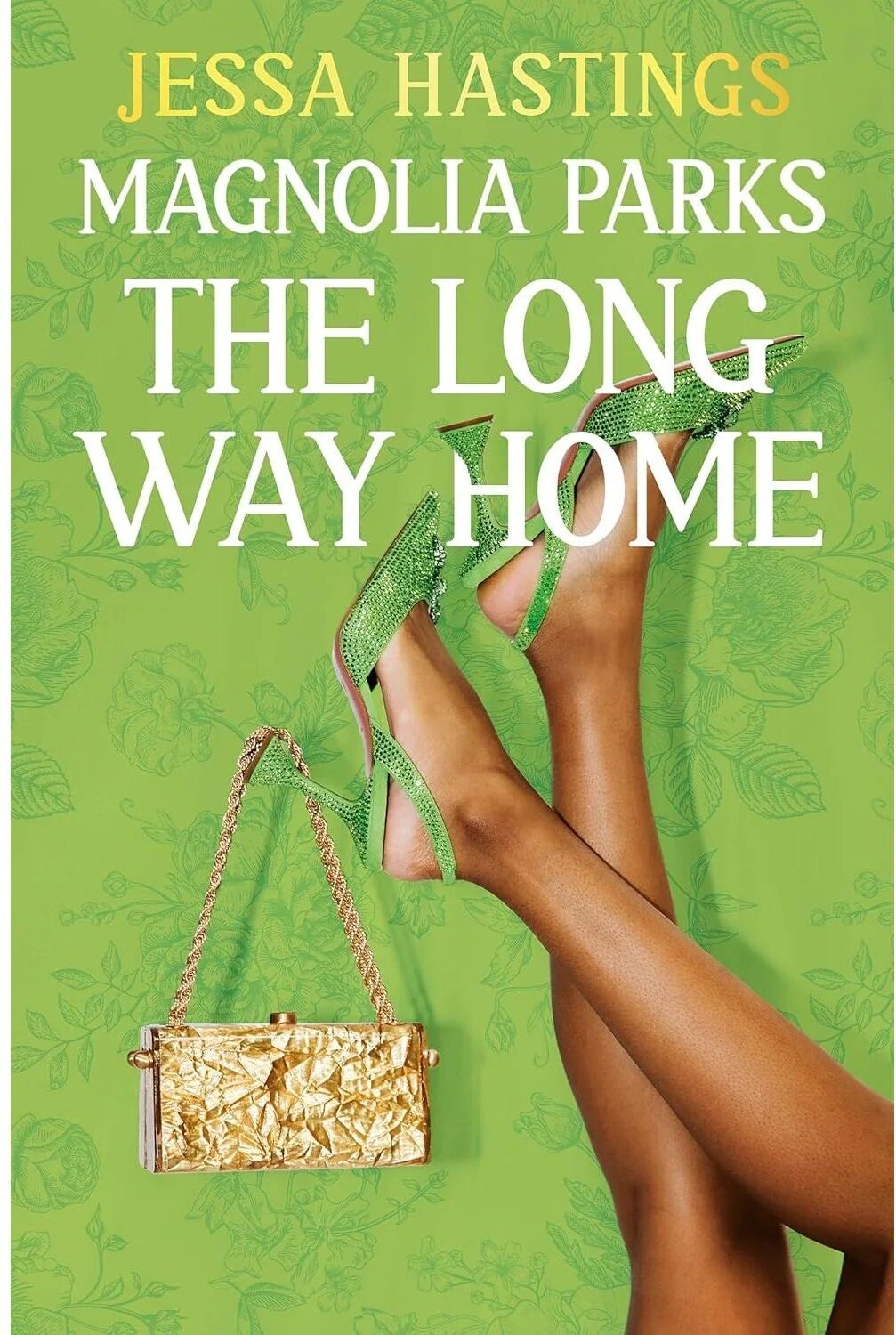
Orion Magnolia Parks: The Long Way Home by Jessa Hastings - Book 3, Magnolia Parks Universe - Paperback Romance FictionMagnolia Parks: The Long Way Home is the third book in Jessa Hastings' addictive Magnolia Parks Universe, a contemporary romance saga that has taken TikTok by storm. This paperback continues the on-again, off-again story of Magnolia and BJ, set against the glossy backdrops of London and New York. Nearly a year has passed since everything unravelled between them, and life has moved on. Magnolia has built a new existence for herself in New York, while BJ appears to have finally let go, moving forward without her. But when circumstances pull them both back to London, old feelings resurface and the pair are forced to confront the question that has haunted them.8,99 £*Shipping: 2,99 £Secure redirect to the provider
-
What is the equivalence of the continuity concepts Epsilon-Delta and sequential continuity?
The equivalence of the continuity concepts Epsilon-Delta and sequential continuity lies in the fact that they both capture the idea of a function being continuous at a point. In the Epsilon-Delta definition, continuity is defined in terms of neighborhoods and limits, while in sequential continuity, it is defined in terms of sequences converging to a point. Both definitions ultimately aim to capture the intuitive notion of a function having no sudden jumps or breaks at a particular point. Despite the differences in their formal definitions, both concepts are equivalent and can be used interchangeably to prove continuity of a function. **
-
How can one disprove continuity?
One way to disprove continuity is to find a point where the function is not defined or where the limit of the function does not exist. Another way is to show that the function has a jump discontinuity, where the value of the function changes abruptly at a certain point. Additionally, one can disprove continuity by demonstrating that the function has an infinite discontinuity, such as a vertical asymptote where the function approaches infinity at a certain point. **
-
What is the continuity equation?
The continuity equation is a fundamental principle in fluid dynamics that states that the mass of a fluid entering a system must be equal to the mass of the fluid leaving the system, assuming there are no sources or sinks of mass within the system. Mathematically, it is expressed as the equation of continuity, which states that the product of the fluid density, velocity, and cross-sectional area must remain constant at any point along a flow. This equation is derived from the principle of conservation of mass and is essential for understanding and analyzing fluid flow in various engineering applications. **
-
What does good continuity mean?
Good continuity means that a story or narrative flows smoothly and logically, with a consistent timeline and no major plot holes or inconsistencies. It ensures that the events and characters in a story remain believable and coherent, maintaining the audience's suspension of disbelief. Good continuity also involves maintaining consistency in the visual and audio elements of a production, such as props, costumes, and sound effects, to create a seamless viewing experience. **
* All prices are inclusive of VAT and, if applicable, plus shipping costs. The offer information is based on the details provided by the respective shop and is updated through automated processes. Real-time updates do not occur, so deviations can occur in individual cases. ** Note: Parts of this content were created by AI.